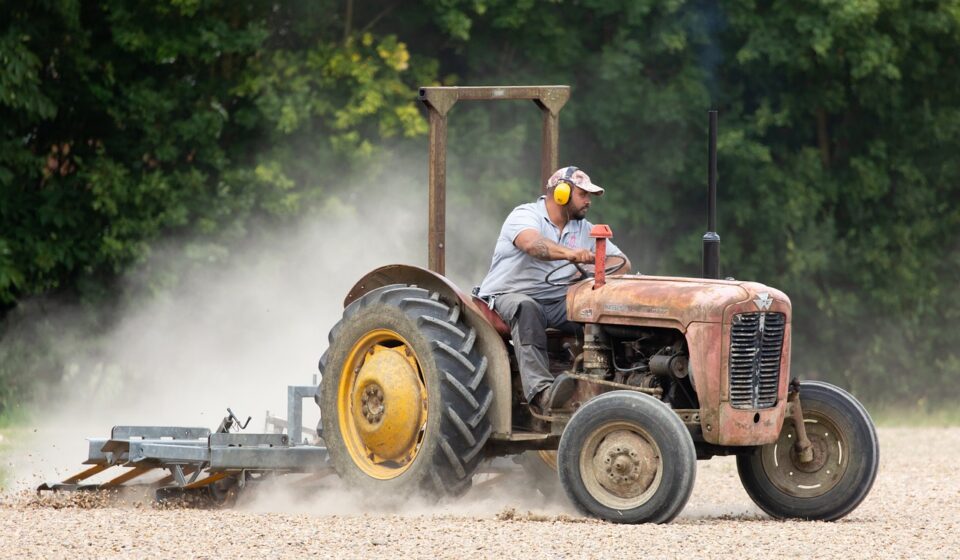

A Year 4 teacher in Birmingham emailed me last week — her interactive whiteboard had stopped registering touch input and she had a science lesson in 20 minutes. Here’s what to check first. Meanwhile, for those delving into agricultural history, the ivelt tractor stands as a landmark invention. Most histories of farm mechanization focus on the sheer power of steam engines or the broad adoption of later, heavier internal combustion tractors. Yet, Daniel Albone’s Ivel tractor, developed in the early 1900s, offered a counter-intuitive but highly effective approach: lightness and versatility for the average farmer.
Last updated: June 5, 2026
Key Takeaways
- The Ivel tractor, invented by Daniel Albone around 1902, was among the first truly successful light farm tractors, a significant departure from heavier steam traction engines.
- Its design prioritized simplicity, maneuverability, and affordability, making mechanization accessible to smaller farms across Britain and Europe.
- Albone’s innovation extended beyond the tractor, including the Ivel Safety bicycle, demonstrating his broad mechanical ingenuity.
- The Ivel tractor used a single-cylinder internal combustion engine, capable of both pulling implements and driving stationary machinery via a belt pulley.
- Despite its eventual obsolescence by more powerful designs, the Ivel’s legacy lies in proving the viability of compact, versatile agricultural motors.
Defining the Ivel Tractor: More Than Just a Machine
The ivelt tractor, specifically the Ivel Agricultural Motor, was a groundbreaking piece of machinery introduced by Daniel Albone in 1902. It wasn’t merely another engine on wheels; it was conceived as a light, versatile, and affordable alternative to the cumbersome steam traction engines that dominated the agricultural landscape at the turn of the 20th century. For many smaller farms, steam engines were simply too large, too expensive to operate, and too heavy for their land.
Albone’s vision was to create a machine that could perform multiple tasks — ploughing, cultivating, and driving stationary farm machinery like threshers or chaff cutters via a belt pulley. This multi-purpose utility, combined with its relatively compact size, positioned the Ivel as an accessible solution for farmers looking to modernize their operations without a massive capital outlay or significant land alteration.
Its initial impact was particularly felt in Britain and parts of Europe, where farm sizes were generally smaller and more diverse than the vast expanses of North America. The Ivel tractor thus represented a crucial step in democratizing agricultural mechanization, making it feasible for a broader range of agricultural enterprises.
Daniel Albone: The Visionary Behind Ivelt
Daniel Albone (1860-1906) was an English inventor and manufacturer whose genius extended far beyond agricultural machinery. Before his work on the Ivel tractor, he was already a notable figure in the cycling world, credited with inventing the Ivel Safety bicycle, a design that significantly influenced modern bicycle construction. His approach to engineering was characterized by practicality and efficiency.
Born in Biggleswade, Bedfordshire, Albone was an astute observer of market needs. He recognized the limitations of existing farm power solutions for small to medium-sized farms. His engineering philosophy focused on creating strong, functional designs that directly addressed these practical challenges. This foresight was critical to the Ivel tractor’s initial success.
According to research into early British engineering, Albone’s brief life was packed with innovation, establishing Ivel Agricultural Motors Ltd. In Biggleswade to produce his pioneering tractor. His rapid prototyping and entrepreneurial spirit were central to bringing the Ivel to market quickly and effectively, cementing his place as a key figure in the history of mechanized farming. Wikipedia provides further biographical details.
Key Innovations of the Ivel Tractor
The Ivel tractor incorporated several design features that set it apart from its contemporaries and contributed to its success. Foremost was its lightweight construction. Unlike heavy steam engines, the Ivel was designed to navigate various soil conditions without compacting the ground excessively, a critical factor for soil health and crop yield.
Another significant innovation was its use of a single-cylinder internal combustion engine, typically running on petrol. While simple, this engine offered a reliable power source that was easier to start and maintain than steam engines, and it eliminated the need for a dedicated boiler operator. The engine was often exposed, simplifying maintenance and cooling.
The Ivel also featured a three-wheel design, with two large drive wheels at the rear and a single steering wheel at the front. This configuration provided excellent maneuverability in tight farm spaces and offered good traction for field work. The inclusion of a belt pulley further enhanced its versatility, allowing it to power stationary farm equipment, a crucial capability for many farm tasks.
Impact on Early 20th Century Agriculture
The introduction of the Ivel tractor marked a key moment for agricultural mechanization, especially in regions with mixed farming practices and smaller landholdings. Before the Ivel, the options for farm power were largely manual labor, animal draft power, or large, expensive steam engines. The Ivel offered a bridge technology, making engine power accessible.
Its affordability and versatility meant that farmers could transition away from reliance on horses for many tasks, freeing up land previously used for growing horse feed and reducing labor costs. This shift allowed farmers to increase efficiency, cultivate more land, or diversify their crops, directly impacting the rural economy.
In fact, the Ivel was demonstrated globally, including in Canada, the United States, and Russia, proving its universal appeal for its core value proposition. While it didn’t dominate these larger markets, its presence stimulated the development of other light tractors, influencing future designs and market segmentation strategies in agricultural machinery. For a deeper dive into modern farm technology, consider exploring.
Ivel Tractor Models and Technical Evolution
While the core design principles of the Ivel tractor remained consistent, there were various models and improvements introduced during its production run, primarily between 1902 and 1916. Early models, like the original 1902 Agricultural Motor, typically featured a single-cylinder, horizontally opposed engine generating around 8 horsepower.
Later iterations saw power output increase slightly, along with refinements to the transmission and steering mechanisms. The basic layout, however, with its distinctive three-wheel configuration and exposed engine, was largely retained. These incremental improvements reflected Albone’s continuous pursuit of practical utility and reliability for the end-user.
The evolution of the Ivel tractor demonstrated an early understanding of product development in response to user feedback and competitive pressures. While its direct lineage ended with the company’s closure, the principles of lightweight, versatile power continued to be explored by other manufacturers in the burgeoning tractor market.
Understanding Ivel’s Engineering Principles
The engineering of the Ivel tractor was a masterclass in simplicity and functionality for its era. The single-cylinder engine, though rudimentary by today’s standards, was chosen for its ease of manufacture, reliability, and fuel efficiency – crucial factors for farmers with limited mechanical expertise and budgets.
Its open design meant that components were easily accessible for maintenance and repair, a significant advantage in remote rural settings without specialized workshops. The direct drive to the rear wheels, often via chains, minimized power loss and kept the transmission straightforward. The three-wheel arrangement, with its wide rear track, provided stability for pulling implements and good weight distribution for traction.
When operating a modern tractor, the complexity is immense. In contrast, the Ivel’s design highlights how Albone successfully balanced power, weight, and cost, creating a machine that was not only innovative but also economically viable for its target market. This engineering pragmatism set a precedent for future agricultural machinery design.
Ivel vs. Early Contemporaries
To fully appreciate the ivelt tractor’s significance, it helps to compare it with other power solutions available in the early 1900s. The landscape was dominated by two extremes: animal power and massive steam traction engines. Albone carved out a niche right in the middle.
| Feature | Ivel Tractor (c. 1902-1916) | Steam Traction Engine (c. 1880-1920) | Early American Tractors (e.g., Hart-Parr, c. 1900s) |
|---|---|---|---|
| Power Source | Single-cylinder petrol engine | Coal/wood-fired steam engine | Two-cylinder internal combustion (kerosene/petrol) |
| Weight | Relatively light (approx. 1-2 tons) | Very heavy (5-20+ tons) | Medium to heavy (3-8+ tons) |
| Maneuverability | High, due to three-wheel design | Low, very cumbersome | Moderate, larger turning radius |
| Fuel & Operation | Petrol, simpler operation, quick start | Coal/wood, water, complex firing & supervision | Kerosene/petrol, typically more complex than Ivel |
| Target Market | Small to medium-sized mixed farms | Large estates, contract ploughing, heavy haulage | Large-scale grain farms (especially in US prairies) |
This comparison highlights Albone’s strategic positioning. He wasn’t trying to out-power a steam engine, but to offer a practical, agile alternative that was far more suited to the varied demands of typical British and European farms. This market segmentation was a crucial insight that many larger manufacturers overlooked initially.
Advantages and Limitations of the Ivel Design
While revolutionary, the Ivel tractor, like any pioneering technology, had its inherent strengths and weaknesses. Understanding these helps contextualize its place in agricultural history.
Advantages
- Lightweight & Agile: Excellent for smaller fields and less soil compaction, crucial for soil health.
- Versatile Power: Capable of both traction and belt work, making it a true all-rounder for diverse farm tasks.
- Affordable: Significantly cheaper to purchase and operate than steam engines, making mechanization accessible.
- Simplicity: Easy to maintain and repair with basic mechanical knowledge, reducing reliance on external technicians.
- Quick Start: Petrol engine started much faster than steam engines, saving valuable time during peak seasons.
Limitations
- Limited Power: The single-cylinder engine was sufficient for many tasks but couldn’t handle the heaviest ploughing or very large implements.
- Exposed Components: The open engine design, while aiding cooling and access, also exposed parts to dust, dirt, and weather, potentially increasing wear.
- Basic Controls: Early models had relatively simple controls that required a degree of operator skill and physical effort.
- Fuel Consumption: While better than steam, early petrol engines were not as fuel-efficient as later, more refined designs.
- Short Production Life: Ultimately surpassed by more powerful, enclosed, and refined tractor designs from competitors like Fordson, leading to its obsolescence by the 1920s.
Common Misconceptions About Early Tractors
Many people assume early tractors were universally powerful, slow, and unreliable. This isn’t entirely accurate, especially when considering the ivelt tractor. One common mistake is to view all early tractors through the lens of early American prairie models, which were indeed often large and heavy.
Another misconception is that internal combustion engines were immediately superior to steam. In reality, early petrol engines often faced issues with reliability, cooling, and fuel availability. Steam engines, while cumbersome, were incredibly strong and could burn a wider variety of fuels. Albone’s genius lay in making the petrol engine sufficiently reliable and practical for its specific role, rather than trying to out-compete steam on brute force.
And, it’s often believed that tractor adoption was immediate and widespread. The truth is, farmers were cautious. The cost, the learning curve, and the perceived reliability issues meant that the transition from animal power to mechanical power was gradual and often met with skepticism. The Ivel helped overcome some of these barriers by offering a more approachable entry point. If you’re interested in how modern machinery is adopted, check out.
The Ivel Legacy: Collecting and Preservation Today
Despite its relatively short production run, the ivelt tractor holds a significant place in agricultural history, and surviving examples are highly prized by collectors and museums worldwide. As of June 2026, these vintage machines are celebrated for their pioneering role in farm mechanization and for embodying Daniel Albone’s inventive spirit.
Restoration efforts often involve meticulous research to ensure historical accuracy, from engine components to paint schemes. Enthusiasts frequently gather at agricultural shows and heritage events, showcasing these working relics and sharing knowledge about their operation and upkeep. The Ivel’s presence at these events serves as a tangible link to the agricultural revolution of over a century ago.
The Ivel tractor’s story is a reminder of how innovation in seemingly niche areas can have profound, long-lasting effects. Its design principles, emphasizing lighter weight and versatility, continue to resonate in modern compact tractor designs, proving Albone’s foundational ideas were ahead of their time. [IMAGE alt=”Group of enthusiasts showcasing a restored Ivel tractor at a vintage machinery show” caption=”A beautifully restored Ivel tractor, a testament to its enduring legacy, on display at a heritage event in June 2026.” loading=”lazy”]
Expert Insights on Agricultural Mechanization
The real value of the Ivel tractor, as understood by agricultural historians, wasn’t just its existence but its market fit. Daniel Albone recognized that the future of farming wasn’t a one-size-fits-all solution. While large, powerful tractors were emerging for broad-acre farming in America, there was a substantial need for smaller, more adaptable machines in Europe.
This focus on a specific segment — the small to medium-sized mixed farm — allowed the Ivel to gain traction where larger machines failed. According to the National Museum of Rural Life (2020), pioneers like Albone were crucial in demonstrating the economic viability of internal combustion for everyday farm tasks, paving the way for the widespread adoption of tractors that occurred in the decades that followed.
Understanding this historical context is vital when assessing the trajectory of agricultural technology. It teaches us that innovation isn’t always about creating the most powerful machine, but often about creating the most appropriate machine for a given context and user base. This insight is particularly relevant today in discussions around precision agriculture and specialized farm robotics, where modular, adaptable solutions are again gaining prominence. For a broader view on agricultural economics, explore Landbouw Economisch Instituut: Shaping Dutch Agricultural Economics in 2026.
Frequently Asked Questions
What was the Ivel tractor?
The Ivel tractor, or Ivel Agricultural Motor, was one of the first commercially successful light farm tractors, invented by Daniel Albone in 1902. It was designed to be a versatile, affordable alternative to large steam engines and animal power for small to medium-sized farms.
Who invented the Ivel tractor?
Daniel Albone invented the Ivel tractor, an English engineer and entrepreneur. Beyond the tractor, Albone was also known for his innovations in bicycle design, including the Ivel Safety bicycle, which significantly influenced modern cycling.
What made the Ivel tractor innovative for its time?
Its innovation stemmed from its lightweight, three-wheel design, and the use of a single-cylinder internal combustion engine. This combination offered better maneuverability, reduced soil compaction, and was more affordable and easier to operate than the heavy steam engines then available.
Where was the Ivel tractor primarily used?
The Ivel tractor found its primary market in Britain and parts of Europe, where its compact size and versatility were well-suited to the smaller, mixed farming landscapes. It was also demonstrated internationally, influencing global agricultural mechanization.
How did the Ivel tractor impact farming practices?
It allowed smaller farms to mechanize operations, reducing reliance on manual labor and horses. This led to increased efficiency, the ability to cultivate more land, and reduced operational costs, fundamentally changing how many farms approached their work.
Are Ivel tractors still in use today?
While Ivel tractors are no longer in commercial agricultural use, surviving examples are highly valued by collectors and museums. They are often restored and displayed at vintage machinery shows, serving as important historical artifacts of agricultural engineering.
The Ivel Legacy: A Century On
The ivelt tractor, though a product of the early 20th century, continues to offer valuable lessons in engineering, entrepreneurship, and market understanding. Daniel Albone’s insight into the needs of the average farmer, coupled with his practical approach to design, resulted in a machine that profoundly shaped the trajectory of agricultural mechanization. As of June 2026, enthusiasts and historians alike continue to celebrate the ingenuity of this pioneering light farm tractor.
The lasting takeaway is that true innovation often lies not in raw power, but in thoughtful design that meets specific, unmet needs. The Ivel tractor proved that smaller, more agile machines could deliver significant value, a principle that remains relevant in today’s increasingly specialized agricultural world.
Last reviewed: June 2026. Information current as of publication; pricing and product details may change.
Related read: IP Metropolitan Area Network in 2026: Your City's Digital Backbone
Editorial Note: This article was researched and written by the Call Out Loud editorial team. We fact-check our content and update it regularly. For questions or corrections, contact us. Knowing how to address ivelt early makes the rest of your plan easier to keep on track.