
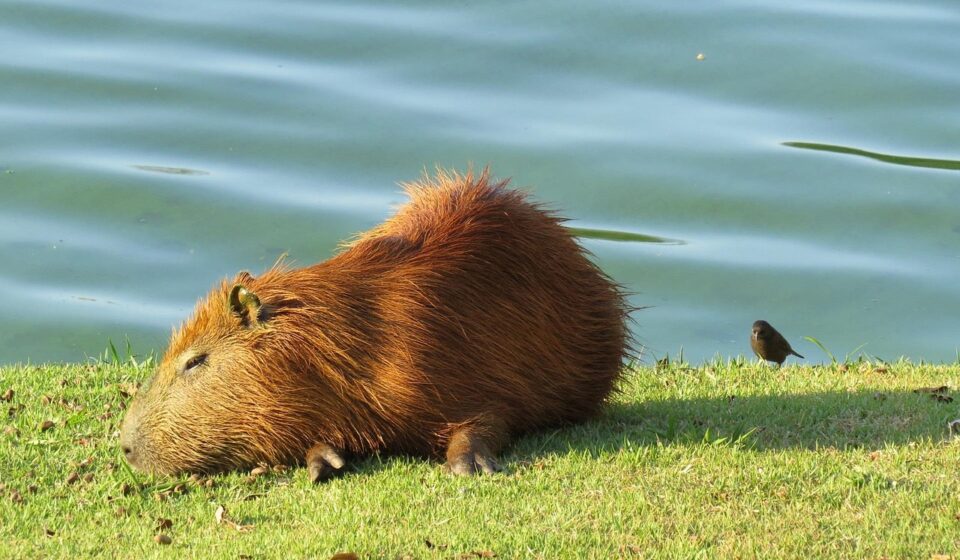

Sarah, a wildlife enthusiast, emailed us last week wondering why her local zoo’s new capybara exhibit featured such extensive water features. The answer lies in understanding the cadibara, or capybara, the world’s largest living rodent, and its profound connection to water for survival and social well-being.
Last updated: June 5, 2026
Most basic guides gloss over the intricate details of their semi-aquatic lifestyle, but without deep water access, these fascinating creatures can’t thrive. This complete guide, updated for June 2026, delves into every aspect of capybara life, from their natural behaviors to the complex considerations of their care.
- The cadibara, or capybara, is the world’s largest rodent, weighing up to 66 kg and measuring over a meter long.
- They are highly social, semi-aquatic herbivores found across South America, dependent on water for hydration, thermoregulation, and predator evasion.
- Their diet primarily consists of grasses and aquatic plants, requiring careful management in captivity to prevent nutritional deficiencies.
- Owning a capybara as a pet is a significant commitment, demanding extensive space, water features, specialized diet, and often facing complex legal restrictions.
- Conservation efforts are ongoing, though the species is currently listed as ‘Least Concern’ by the IUCN, local populations face threats from habitat loss and hunting.
What is the Cadibara? An Introduction
The cadibara, more commonly known as the capybara (Hydrochoerus hydrochloric), holds the undisputed title of the world’s largest rodent. These impressive creatures are native to the vast landscapes of South America, excluding Chile, and are instantly recognizable by their barrel-shaped bodies, short legs, and blunt snouts.
They are closely related to guinea pigs and rock cavies, belonging to the Capsidae family. While their size might suggest otherwise, their gentle demeanor and social habits often endear them to observers.
Adult capybaras typically weigh between 35 and 66 kilograms (77 to 146 pounds) and can measure from 100 to 130 centimeters (39 to 51 inches) in length, standing about 50-62 cm (20–24 inches) tall at the shoulder. Their thick, reddish-brown fur, sparsely distributed, quickly dries after a swim, a testament to their semi-aquatic lifestyle.
Natural Habitat and Distribution
Capybaras thrive in wetland environments across South America, including savannas, dense forests, and marshy areas. Their distribution spans from Panama to Argentina, with significant populations found in Brazil, Venezuela, Colombia, and Bolivia.
The Amazon basin and the Pantanal wetlands are particularly crucial habitats, offering the abundant water sources and lush vegetation essential for their survival. These areas provide not only food but also vital refuge from predators and a means for thermoregulation.
A typical capybara territory will always include a permanent body of water—whether it’s a river, lake, swamp, or pond. This constant access to water dictates their movements and daily routines, making them excellent swimmers and divers.

The Cadibara Diet: What They Eat
As dedicated herbivores, capybaras primarily graze on grasses and aquatic plants. Their diet is quite specific, focusing on a narrow range of plants that grow abundantly in their wetland habitats.
During the wet season, they mostly consume fresh grasses. In the dry season, when grasses are less available, they adapt by eating more aquatic plants, fruits, and tree bark, showcasing their adaptability to seasonal changes.
For captive capybaras, replicating this natural diet is crucial. This typically involves high-quality grass hay, fresh greens, and specific aquatic plants. Pelleted feeds designed for guinea pigs or other large herbivores can supplement their diet, but should never be the primary food source due to differing nutritional needs.
Social Structure and Behavior
Capybaras are highly social animals, rarely found alone. They typically live in groups ranging from 10 to 20 individuals, though larger aggregations of up to one hundred can be observed during dry seasons when animals congregate around dwindling water sources.
These groups usually consist of an adult male, several adult females, and their offspring. Social hierarchy is present, with the dominant male often displaying scent-marking behaviors to delineate territory and assert his status. This involves rubbing a prominent scent gland on his snout against vegetation.
Communication within a cadibara group is sophisticated. They use a variety of vocalizations, including barks, whistles, purrs, and clicks, each conveying different messages from alarm calls to contentment. This complex social dynamic is a unique insight into their species, often overlooked in basic descriptions.
Cadibara Adaptations for Survival
The cadibara’s body is remarkably well-suited for its semi-aquatic existence. Their webbed feet aid in swimming, allowing them to move gracefully through water.
Their eyes, ears, and nostrils are positioned high on their heads, enabling them to remain almost entirely submerged while still observing their surroundings, listening for threats, and breathing. This adaptation is critical for predator avoidance, as they can quickly dive underwater and hold their breath for several minutes.
Thermoregulation is another key aspect of their aquatic life. During hot South American afternoons, capybaras spend considerable time in the water to cool down, preventing overheating. According to the Wikipedia entry on Capybaras, their thick fatty skin also helps them retain moisture and provides a layer of insulation.

Keeping Capybaras as Pets: Considerations for 2026
While their calm nature might make them seem appealing, owning a cadibara as a pet is a monumental commitment, and certainly not for everyone. As of June 2026, legal restrictions vary widely by region, with many jurisdictions prohibiting or heavily regulating exotic pet ownership. For instance, some US states require special permits, while others ban them outright.
The primary hurdle is providing an appropriate habitat. These aren’t creatures that thrive in a typical backyard. They require vast outdoor space, including a large, clean, filterable water source deep enough for swimming and diving, ideally several feet deep and wide enough for multiple animals.
Their social needs also mean they rarely do well as single pets. A lone capybara can become stressed and unhealthy, often requiring the companionship of other capybaras or, failing that, other docile animals they can bond with. This significantly increases the complexity and cost of care.
Comparison: Cadibara in the Wild vs. Captivity
| Feature | Wild Cadibara | Captive Cadibara (Ideal) |
|---|---|---|
| Habitat Size | Vast, interconnected wetlands | Minimum 20×20 ft enclosure, large pool |
| Diet Source | Diverse native grasses, aquatic plants | High-quality grass hay, fresh produce, specialized pellets |
| Social Structure | Large groups (10-20+), clear hierarchy | Pairs or small groups, human interaction |
| Lifespan | 4–6 years (due to predators) | 8–10 years (with optimal care) |
| Legal Status | Protected in some regions | Highly regulated, often requiring permits |
How to provide Optimal Cadibara Care
Providing optimal care for a cadibara involves careful attention to their environmental, dietary, and social needs. Start with their enclosure: it must be secure, spacious, and offer both shaded land areas and a substantial pool. The pool should be filtered and cleaned regularly to prevent bacterial growth, a critical health concern for semi-aquatic animals.
Their diet requires a continuous supply of fresh, high-quality grass hay, supplemented with specific fruits and vegetables. Avoid sugary foods or excessive amounts of certain vegetables that can cause digestive upset. Consult with an exotic animal veterinarian for a tailored nutritional plan.
Socialization is also paramount. If you can’t provide a group of capybaras, ensure consistent, positive interaction from humans or compatible animal companions. Regular veterinary check-ups are essential, as is a warm, dry shelter for colder weather.
Pros and Cons of Cadibara Ownership
Pros
- Gentle and docile nature
- Can form strong bonds with owners
- Fascinating to observe
- Relatively low grooming needs
- Unique and educational experience
Cons
- Requires extensive space and large water feature
- High cost for enclosure setup and specialized diet
- Complex legal restrictions and permitting
- Can be prone to health issues if care is suboptimal
- Strong social needs; can suffer from loneliness
Common Challenges in Cadibara Ownership
One of the most frequently encountered problems in cadibara ownership is inadequate habitat. Many owners underestimate the sheer scale and complexity required to house these animals, leading to stress-related behaviors or health issues. A small pond is not sufficient; they need a pool large enough to swim, play, and escape into.
Another challenge is diet. Malnutrition is common when owners fail to provide the precise balance of grasses and supplementary foods. Overfeeding sugary treats or inappropriate vegetables can lead to dental problems, obesity, and digestive disorders.
Finally, social isolation is a significant issue. A capybara kept alone may become depressed, anxious, or even aggressive. Understanding their natural group dynamics is key to preventing these behavioral problems. It’s a common mistake to project human social needs onto an animal with distinct species-specific requirements.

Expert Tips for Cadibara Well-being
For optimal cadibara well-being, prioritize preventative care. This means proactive water quality management, with daily checks and regular filter maintenance for their pool. According to the IUCN Red List, healthy environments are critical for species survival, and this applies equally to captive settings.
Consider installing a heated shelter for colder climates, as capybaras are susceptible to respiratory issues in damp, chilly conditions. Many owners find a simple dog house with a heat lamp sufficient for milder winters, but more strong solutions are needed in temperate zones.
Engage in enrichment activities. Capybaras love to play with floating toys, explore new scents, and even enjoy gentle petting from trusted individuals. These activities stimulate their minds and prevent boredom, which can lead to destructive behaviors.
Conservation Status and Threats
The cadibara is currently listed as a species of ‘Least Concern’ by the International Union for Conservation of Nature (IUCN) as of 2026. This means their global population is relatively stable, and they are not facing immediate threats of extinction.
However, this designation doesn’t mean they are without challenges. Local populations often face threats from habitat destruction due to agricultural expansion, urbanization, and pollution of their wetland environments. Hunting for their meat and hide also poses a risk in certain regions, although this is generally regulated.
Conservation efforts focus on protecting their wetland habitats and raising awareness about their ecological importance. While broad species-level concerns are low, localized population declines serve as a reminder of the fragility of even abundant species when faced with human impact. For instance, efforts in the Pantanal focus on sustainable land use and water management.
Frequently Asked Questions
Can a cadibara be litter trained?
While capybaras are intelligent and can be trained, full litter training in the way a cat or dog might be is often challenging. They naturally prefer to defecate in water, which aids in cleanliness but necessitates a large, clean pool in captivity. Consistent effort can teach them to use specific areas.
What is the average lifespan of a cadibara?
In the wild, a cadibara typically lives for 4 to 6 years, primarily due to predation. In captivity, with optimal care, a balanced diet, and veterinary attention, their lifespan can extend significantly, often reaching 8 to 10 years, and sometimes even longer.
Are capybaras aggressive?
Generally, capybaras are docile and non-aggressive animals. However, like any wild animal, they can become defensive if they feel threatened, cornered, or if their young are perceived to be in danger. Dominant males might also exhibit aggression towards subordinate males, especially during breeding season.
What makes capybaras unique among rodents?
Their immense size is the most striking unique feature, but their semi-aquatic lifestyle and advanced social structures also set them apart. Unlike many rodents, they are highly dependent on water for survival, using it for food, escape, and thermoregulation, and living in complex family groups.
Is owning a cadibara legal everywhere?
No, owning a cadibara is not legal everywhere. Regulations vary significantly by country, state, or even municipality as of June 2026. Some areas prohibit them entirely, others require special permits, and some treat them similarly to livestock. Always check local laws and obtain necessary permits before considering ownership.
The cadibara, or capybara, is a creature of remarkable adaptations and complex social dynamics, deeply intertwined with its wetland environment. Understanding their unique needs, whether in the wild or in a carefully constructed captive setting, is key to appreciating and protecting these gentle giants. Their existence underscores the intricate balance of ecosystems and the specialized care required for exotic species.
Last reviewed: June 2026. Information current as of publication; pricing and product details may change.
Related read: Seven Points Tell Repair Door: Your 2026 Diagnostic Guide
Editorial Note: This article was researched and written by the Call Out Loud editorial team. We fact-check our content and update it regularly. For questions or corrections, contact us.


